
Kidney Stone Treatment in Gurgaon
Same surgeon at every step. Hospital-grade laser when you need it.
Evaluation, conservative management and laser kidney stone treatment with Dr. Anirudh Kaushik — 30+ years as a senior urologist. Consult, plan and follow-up at the clinic in South City 2; the surgical step happens at hospital where the holmium laser and full theatre setup are available.
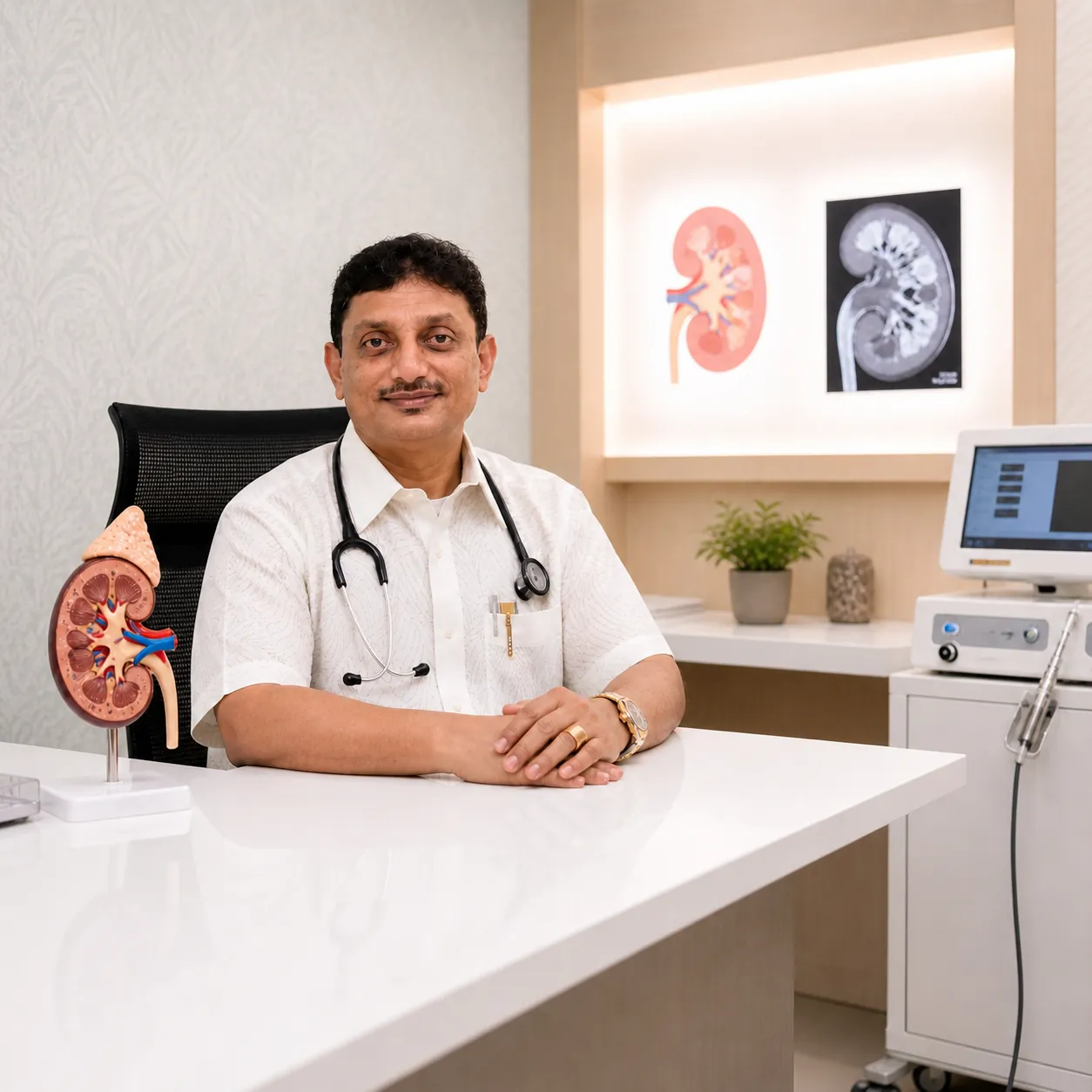
Dr. Anirudh Kaushik
Senior Urologist · MBBS, MS, M.Ch (Urology)
Delhi Medical Council (DMC) Reg. No. 3985
In short
A senior urologist with 30+ years of experience, evaluating kidney stones from a clinic in South City 2, Gurgaon. Most stones under 6 mm pass on their own with hydration and medication; larger stones, infected stones or persistent pain are treated with laser lithotripsy or RIRS at hospital — the consultation, planning and follow-up all stay at the clinic. Honest pricing (₹1,500 for the evaluation, written estimate before any surgery), insurance accepted at the partner hospital.
What to expect, step by step
Conservative-first means we don't reach for a procedure unless it's the right answer. Most kidney stones don't need surgery.
1. Diagnosis
History, examination, urinalysis and imaging — usually ultrasound, sometimes a non-contrast CT. Confirms stone size, location and any obstruction.
2. Conservative care
For smaller stones — aggressive hydration, pain control, and sometimes medication that relaxes the ureter. Many stones pass naturally over days to weeks.
3. Laser treatment
When indicated — laser lithotripsy or RIRS at hospital. Minimally invasive, no external incisions. Holmium laser fragments the stone, fragments pass naturally.
4. Recovery
Typically a one-night hospital stay, normal activity within a week. JJ stent removal (if placed) is a quick clinic procedure 1–3 weeks later.
5. Recurrence workup
Once the stone is treated, a metabolic workup identifies why your body forms stones — so we can prevent the next one with diet, hydration and sometimes medication.
6. Long-term follow-up
Annual review with imaging if you're a recurrent stone-former. Hydration coaching, diet review, periodic blood and urine work. Built into the routine, not pushed as add-ons.
Kidney stone questions, answered
Call +91-9910033190 if you have a question that isn't here.
How are kidney stones diagnosed?
When can a kidney stone pass on its own without surgery?
What is laser kidney stone removal (RIRS or laser lithotripsy)?
Where is the laser procedure performed?
How much does kidney stone laser treatment cost in Gurgaon?
Is health insurance accepted for the surgery?
How long is the recovery after laser stone removal?
Can kidney stones come back after treatment?
How can I reduce my risk of forming another kidney stone?
I have severe pain and fever — should I go to the ER first?
When kidney stone pain is an emergency
Severe flank pain (the side of your lower back, between the ribs and hip) or back pain combined with fever or chills means a possible obstructed kidney with infection — a urological emergency that needs hospital drainage within hours. Inability to pass urine, severe vomiting that prevents you from staying hydrated, or any loss of consciousness also need ER assessment. Call 102 or go to the nearest hospital emergency department immediately, then follow up with Dr. Anirudh once you are stable.
Ready to get evaluated?
Evening slots only, by appointment. Book online or call +91-9910033190.
This page was last reviewed by Dr. Anirudh on 4 May 2026. The information here is general in nature and not a substitute for a clinical consultation. For emergencies, call 102 or proceed to the nearest emergency department.